
The Importance of Fats in Your Diet: Why They’re Essential for Health, Hormones & Performance
For years, dietary fats have been wrongly labelled as the enemy — blamed for weight gain, poor health, and countless diet failures. But modern research (and real-world experience) continues to prove the opposite: fats are absolutely essential for optimal health, performance, and well-being.
At Raw Performance, we help clients rebuild their relationship with food, and understanding the role of dietary fats is one of the most powerful shifts you can make. In this blog, we break down exactly why fats matter and how they impact everything from hormones to brain function.

1. Fats Are Fundamental for Hormone Production
Many of your body’s most important hormones rely on fats and cholesterol as their building blocks. These include:
Testosterone
Estrogen
Progesterone
Cortisol
Vitamin D (yes, it acts like a hormone)
When fat intake is too low for an extended period, the body simply cannot produce hormones efficiently. This can lead to:
Disrupted menstrual cycles
Low libido
Mood instability
Low energy
Impaired recovery
Increased stress response
While your liver produces some cholesterol, chronically low-fat diets limit the materials your endocrine system needs to function optimally. Ensuring you consume healthy dietary fats supports stable hormones and overall vitality.

2. Fats Enable Absorption of Vitamins A, D, E & K
Certain vitamins are fat-soluble, meaning your body can only absorb them properly when dietary fat is present. These vitamins are essential for:
Immune function
Bone strength
Skin health
Vision
Blood clotting
Anti-inflammatory processes
Consuming fat-soluble vitamins without fat dramatically reduces their absorption, which means your body simply passes much of them through unused. Even adding 5–10g of fat to a meal can significantly improve vitamin uptake.
It’s a common mistake for people to take vitamin D, K, or A supplements on an empty stomach — but they’re far more effective when taken with your fattest meal of the day.
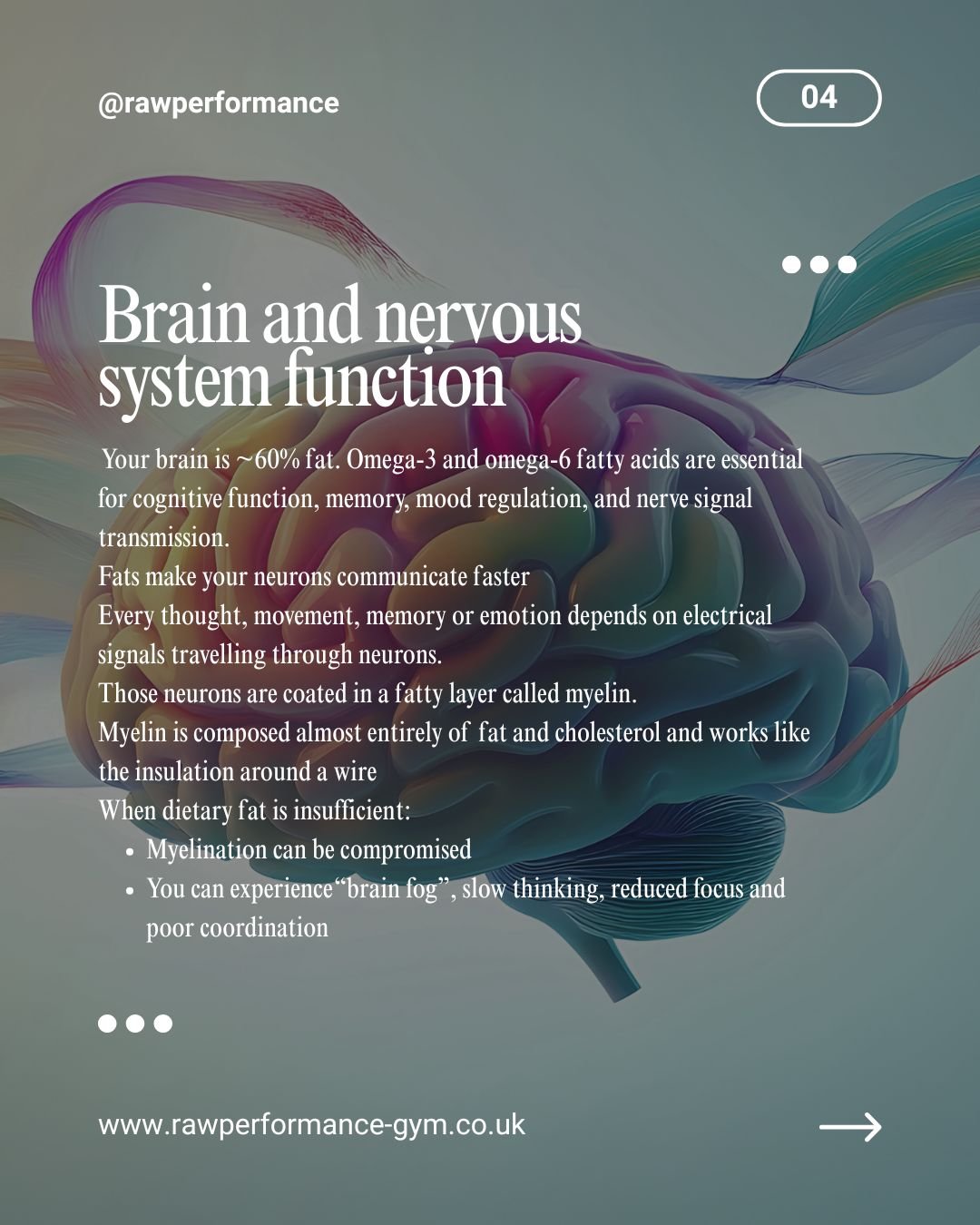
3. Fats Support Brain & Nervous System Function
Your brain is approximately 60% fat, and its structure depends on fatty acids to function. Omega-3 and omega-6 fats, in particular, are crucial for:
Cognitive performance
Memory
Mood regulation
Nerve signalling
Reduced inflammation in neural tissue
Fat also enhances communication between neurons, and the myelin sheath — the protective layer around your nerve cells — is made almost entirely of fat and cholesterol. Without sufficient fat:
Myelination can slow
Brain fog may increase
Focus and coordination can suffer
Thinking becomes less sharp
Adequate dietary fats help keep your brain firing efficiently.
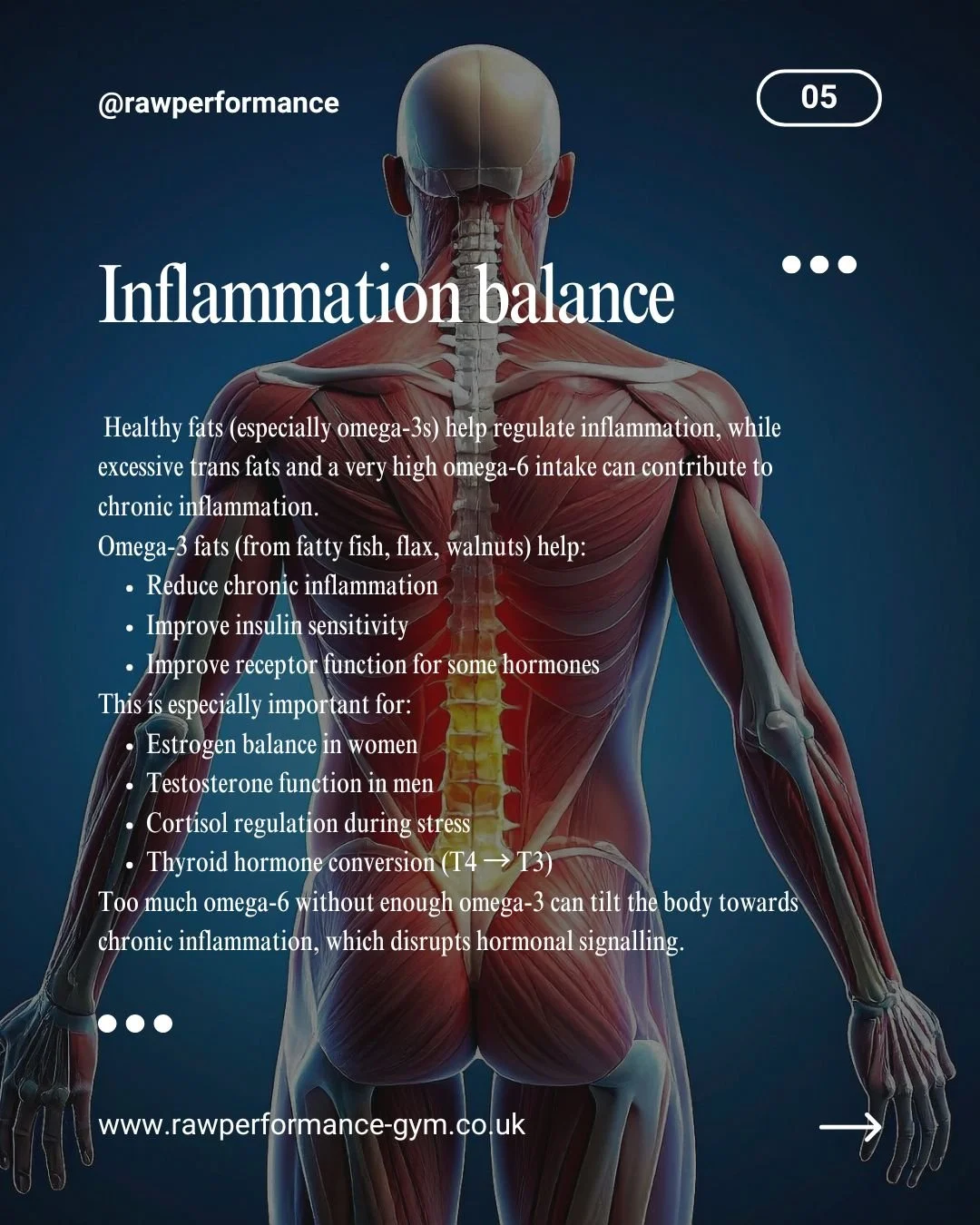
4. Fats Help Regulate Inflammation
Not all inflammation is bad — but chronic inflammation is strongly linked to long-term health issues. Healthy fats, particularly omega-3 fatty acids (found in fish, flax, chia, and walnuts), help to:
Reduce chronic inflammation
Improve insulin sensitivity
Support hormone receptor function
Aid cortisol regulation
Support thyroid hormone conversion (T4 → T3)
On the other hand, a diet high in processed foods, excessive omega-6 fats, and trans fats can tip the body into a pro-inflammatory state. Maintaining a healthy balance between omega-3 and omega-6 intake is essential for hormonal and metabolic health.
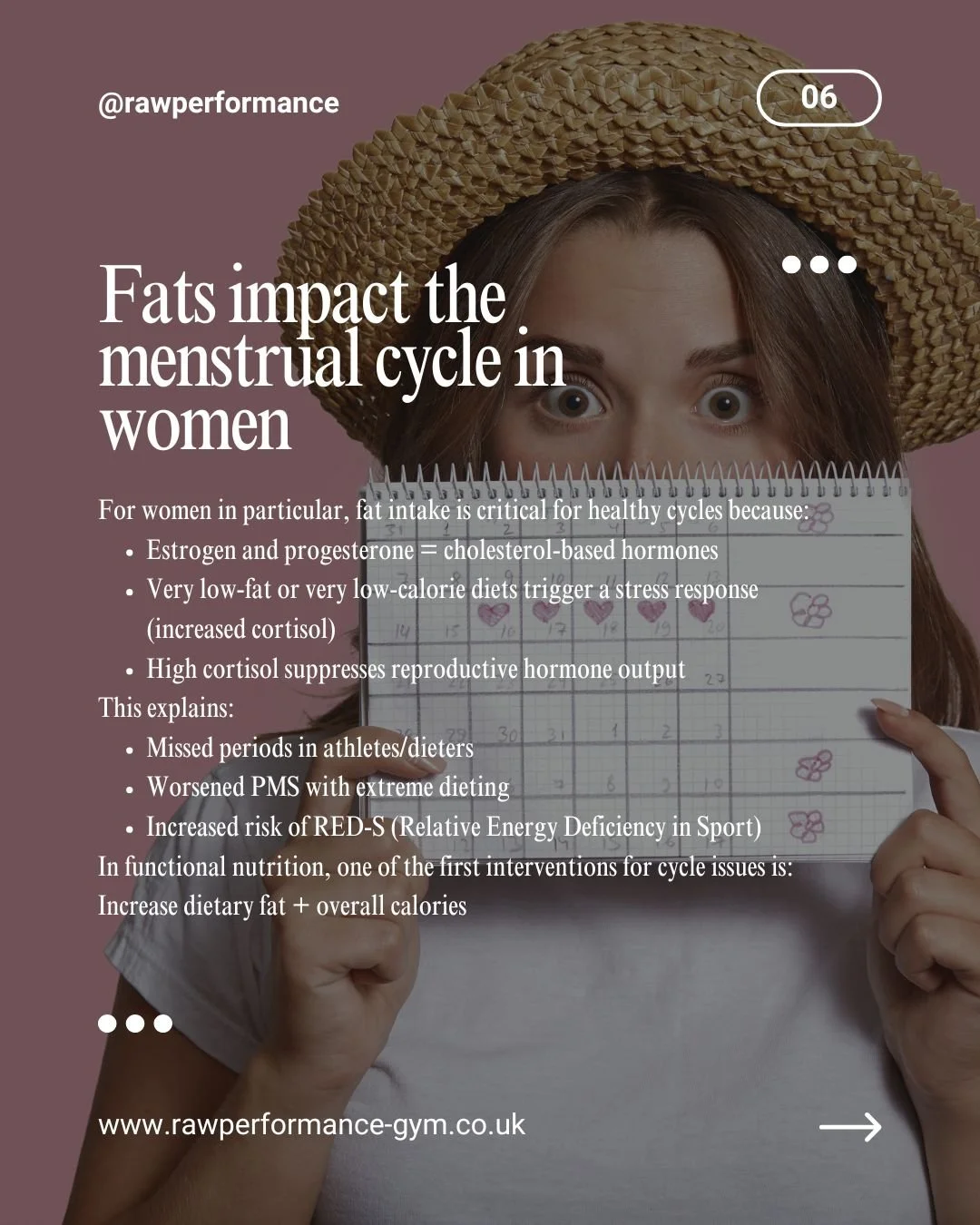
5. Fat Intake Is Critical for Women’s Menstrual Health
For women, dietary fat plays an especially important role in maintaining a healthy menstrual cycle. Estrogen and progesterone — the main reproductive hormones — are cholesterol-based. When fat intake is too low, the body perceives stress and shifts into “survival mode,” increasing cortisol production.
Elevated cortisol suppresses reproductive hormone output, which can lead to:
Missed or irregular periods
Worsening PMS
Reduced fertility
Increased risk of RED-S (Relative Energy Deficiency in Sport)
This is particularly common among athletes, dieters, and women who chronically under-eat. One of the first nutritional interventions for cycle issues is often to increase dietary fat and overall calories.
6. Fats Improve Overall Energy, Satisfaction & Performance
Beyond their role in specific physiological processes, fats:
Keep you fuller for longer
Stabilise blood sugar
Provide a sustained source of energy
Enhance joint health
Improve recovery and performance in training
Incorporating a balanced variety of fats — including avocados, eggs, nuts, seeds, oily fish, olive oil, and quality dairy — allows your body to thrive rather than just get by.
The Takeaway: Fats Are Essential, Not Optional
Instead of fearing fats, it’s time to embrace them as a vital part of a healthy, balanced diet. At Raw Performance, we help our clients understand nutrition in a way that empowers them — not restricts them.
If you’re struggling with low energy, hormonal issues, inconsistent cycles, or performance plateaus, your fat intake may be part of the problem.
Want Help Optimising Your Nutrition?
Our coaching team specialises in evidence-based, personalised nutrition that supports real-world performance and long-term health.
👉 Learn more or make an enquiry at:
www.rawperformance-gym.co.uk